A compilation of week journals made for Nazi-puppet regime in Croatia during WW II which show the warfare of Ustasha forces against Yugoslav partisans and Chetniks in eastern Bosnia.
Blending historical fact and adventure fiction, Emiliano Zapata's (fictional) right-hand man takes leadership of his regiment after he's killed.
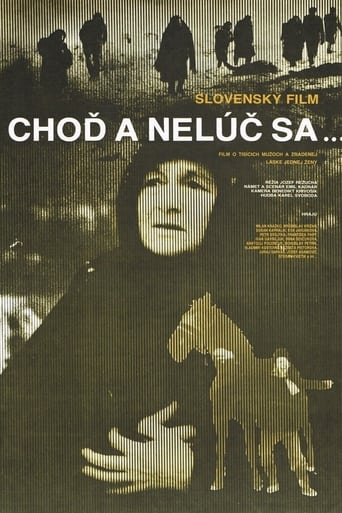
The dramatic story captures the hard and dangerous life of the partisan group "Čapajev" led by Ľudovít Kukorelli during World War II. It retrospectively presents the course of the Slovak National Uprising in eastern Slovakia.
The main character is Anna, an outstanding pediatrician. She survived the harsh years of war in a concentration camp and cannot accept the behavior of her daughter Natalia, who uses her connections and cares only about material goods. Anna is reminded of 1939, when Piotr, who had been missing for forty-five years, arrives in Poland. Together, they visit places that are important to them: Auschwitz, Sachsenhausen, and Ravensbruck.
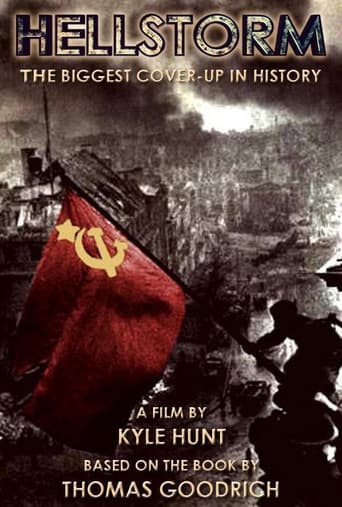
A documentary that tells the tale that the victors still do not want you to know. Learn the terrible truth about the rape, torture, slavery, and mass murder inflicted upon the German people by the Allied victors of World Word II.
The film portrays a different dimension of the political uprising which happened in the north of Iraq(Kurdistan) in 1991, the political movement led to separate the Kurdish region from Iraq and liberation from the former Iraqi regime. The film contains the idea that the revenge mentality can be avoided under any circumstances despite a long-term dictatorial era.
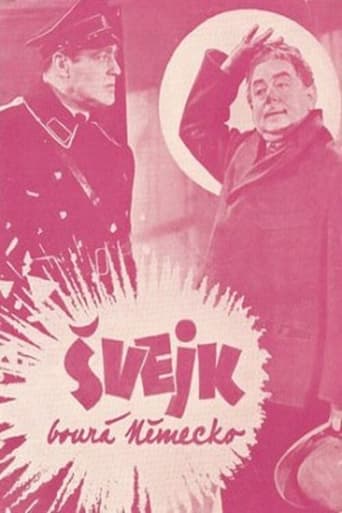
KAREL LAMAČ (1987-1952), who worked in Germany for a long time, was forced to leave for France and then Great Britain before Hitler's fascism, where he continued to direct films. His film Švejk is Destroying Germany from 1943 was created under the influence of wartime circumstances and was intended mainly for a British audience. Perhaps this is also why the tone of the original Czech hero of Hašek's humorous original deviates from his traditional way of portraying him. He transfers him to the wartime reality of the time and, through a series of coincidences, makes him a military servant of the Gestapo commander, which gives Švejk the opportunity to save many people from deportation to concentration camps. Lamač is therefore not driven by the motive of an authorial interpretation but rather by the need for propaganda. This is also emphasized by Foreign Minister Jan Masaryk, whose opening words were added to this comedy in 1947, when it was released into Czechoslovak film distribution.
Mahabharata
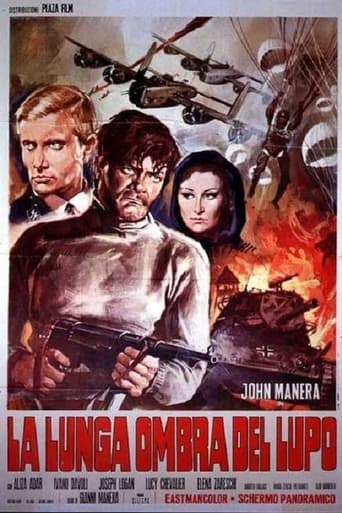
During the Second World War, the Germans hunt an Italian partisan who is trying to blow up a chemical weapons laboratory.
Death in all it's faces and stages. From the horrors of Buchenwald to the devastation of Hiroshima. From the political assassinations of the second half of the 20th century to the bloody feeding frenzy of the pythons of Burma. Burned on to the screen like napalm victims of Vietnam. Followed by "Death in Focus" part 2.
This unaired pilot for a series Fuller pitched to CBS about a U.S. infantry troop fighting its way through Nazi-held North Africa offers a fascinating new angle on Fuller’s relationship with the average foot soldier and moral complexity of war.
Set against the rich backdrop of Yoruba tradition, a courageous woman rises against oppression in her community. As she fights for justice, she must navigate political schemes, betrayal, and the weight of tradition.
This is the sad story of several desperate ladies incarcerated somewhere in Italy in a camp for displaced women after the end of World War II. Among them, Anna, a Yugoslav, who has seen her husband killed in Trieste by political enemies. She is pregnant and her one and only aim right now is her baby to be born. Janka, a beautiful Polish girl who has lost her mind, is reunited with the physician who sent her to a brothel for Nazi officers. As for Yvonne, a light-hearted French woman, she is prepared to do anything to leave the place, including to marry out with an Albanese ice cream man, despite his unappetizing looks. At least,she will stop being a woman without a name.
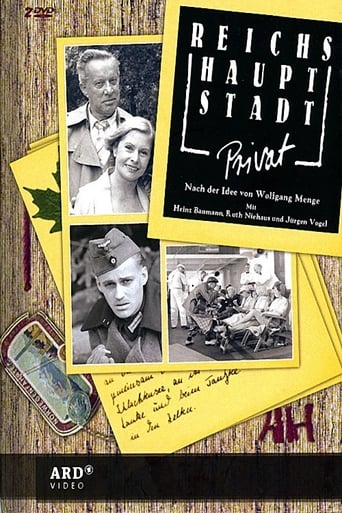
Anna and Kurt spent their youth in Berlin, then the capital of the Greater German Reich. In the summer of 1938, they met on board the "Strength through Joy" cruise ship "Ozeana" during a trip to Norway. Kurt and Hanna fell in love and almost got married later, but the war broke them up. While Anna stayed in Berlin, Kurt was taken prisoner. Twenty years after the end of the war, the two met by chance in Düsseldorf and since then Kurt, who now lived in Canada, had come to Berlin from time to time. It was here that he proposed to Anna for the second time. As a preliminary answer, however, Anna had given him her diary from those days...
A sideshow barker uses magic and visual aids to alert the public that proper food management is both a resource and a weapon that could be to America's advantage if conserved properly in winning the then current World War. Preserved by the Academy Film Archive, Academy War Film Collection, in 2008.
Activate your FREE Account!
You must create an account to continue watching