The Baltic captain Terje Wiggen works as a pilot on the island of Muhu. When the mate of the ship “Carola” calls in sick, he jumps at the chance of reviving his life as a sailor. WWI breaks soon after the departure. By and by the ship’s company gets worn down by dead calm. On account of the plague-ridden captain, Wiggen disposes of the contaminated water reserve. Discontent among the crew rises until they take the sole lifeboat and leave their mate behind. Wiggen unsuccessfully tries to bring the ship under control. At the last minute he is rescued off the Japanese coast. At his return he promises to never leave his wife and child again. But the German Imperial Navy begins to blockade the waterways of the island. Wiggen paddles to Sweden with the intention of smuggling provisions for his family. On his way back he is detained by a German captain. After five years of imprisonment he returns to Muhu once more. Wiggen is hellbent on vengeance. (Deutsche Kinemathek)
At the Paulistano Club pool, Lygia tells Nilo that she liked the album "Lua Branca," recorded by the young man. He promises to visit her to perform the song in person. The visit marks the beginning of a romance between the two, which later becomes an engagement. However, Nilo is involved in the 1924 uprising in the barracks and, with the outbreak of the revolution, leaves for the front. The city of São Paulo shows the damage caused by the bombings. The rebels, wanting to avoid further sacrifices to the city, after days of fighting and victory, decide to abandon it.
An instructional video that teaches, through stop-motion animation, how to build a bridge over a gorge that can hold heavy military equipment. Preserved by the Academy Film Archive in 2004.
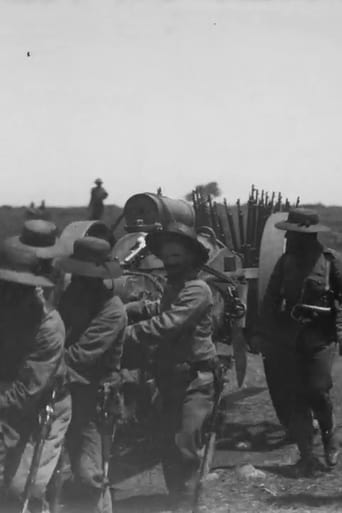
Naval ratings pulling along naval guns during the Boer War.
Partisans resist the terror of Italian fascists and Serbian Chetniks in the South-East of Bosnia and Herzegovina during WWII.
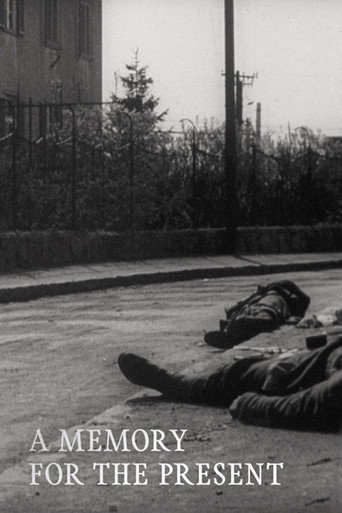
Reflecting on the memory and legacy of the Second World War.
A human hand throws a box of cigarettes on the chessboard. It has a picture of a house and the sun on it. The chess king organized a military campaign against a foreign body. Chess rooks shoot. Chess knights are riding. The march of the troops goes to the end of the chessboard. The king decides to take over the surrounding space. Black and white squares cover one picture, a funny prankster, and even a globe. A human hand sweeps away the chess pieces and collects them in a box.
In this film, Matthew McMurray, Royal Voluntary Service Keeper of History sets the scene for the charity’s beginnings and its impact on British society. He then introduces Willing Hands, a historic film produced for the Ministry of Information, which shows the activities of the then Women’s Voluntary Service (WVS) during the Second World War, supporting people in need.
Relive one of the longest and most destructive sieges in history that led to the systematic starvation and destruction of the human population.
A party game in which players compete for a decreasing number of chairs, the losers in successive rounds being those unable to find a chair to sit on when the accompanying music is stopped.
A Canadian RCAF Pilot is shot down over the Ukraine. Here he is rescued and learns of the plight the Ukrainians face in WW2 in relation to both the Nazis and the Russians
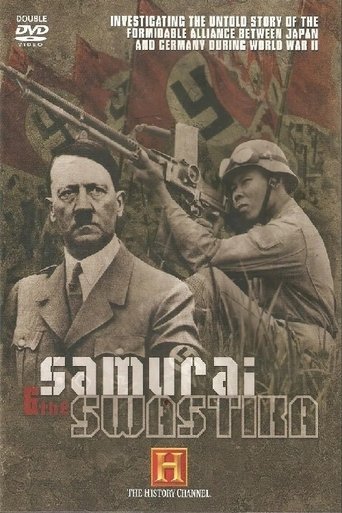
Chronicles the strategic alliance between the Axis powers. Examines how Japan supplied Germany with much-needed raw materials for the war, while German engineers shared sophisticated rocket and jet-propulsion technology with their Japanese counterparts. Jointly, they supported anti-English uprisings in India, giving aid and military supplies to Bose Chandras, a dissident Indian general, and his guerilla army. They conspired to destroy the Panama Canal and cut off America's Pacific war from its crucial Atlantic supply operations. Uses computer animations to illustrate this plan.
Air raid bunkers represent the architecturally intact remains of World War II. The film looks into their ideological as well as their material texture and puts them into the context of the urban infrastructure of the nineties.
US Army Green Berets patrol the roads, small towns and villages in Southeast Afghanistan near the Pakistani border, supporting the local police against attack, training the local militia and dealing with the local warlords.
Official War Film produced by the U.S. Army Signal Corps shows the importance of U.S. and allied factories in turning out military arms and vehicles to help in the war effort.
Activate your FREE Account!
You must create an account to continue watching