Historical samurai OVA about the deputy leader of the Shinsengumi, who fought on the side of the Shogun prior to the Meiji Restoration.
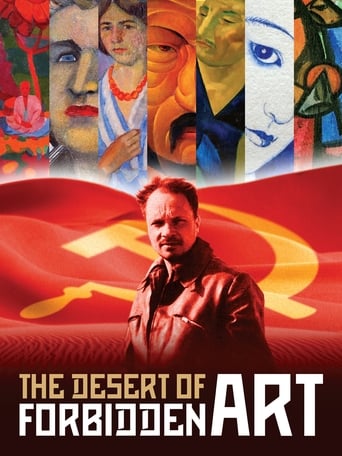
How does art survive in a time of oppression? During the Soviet rule artists who stay true to their vision are executed, sent to mental hospitals or Gulags. Their plight inspires young Igor Savitsky. He pretends to buy state-approved art but instead daringly rescues 40,000 forbidden fellow artist's works and creates a museum in the desert of Uzbekistan, far from the watchful eyes of the KGB. Though a penniless artist himself, he cajoles the cash to pay for the art from the same authorities who are banning it. Savitsky amasses an eclectic mix of Russian Avant-Garde art. But his greatest discovery is an unknown school of artists who settle in Uzbekistan after the Russian revolution of 1917, encountering a unique Islamic culture, as exotic to them as Tahiti was for Gauguin. They develop a startlingly original style, fusing European modernism with centuries-old Eastern traditions.
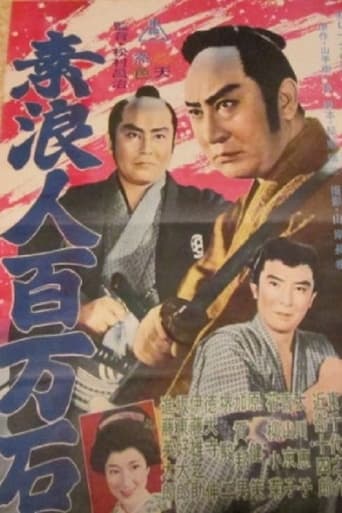
At a tavern in Shimoda, Ronin Tadakazu Yamakawa saved a samurai girl named Mino from the clutches of the Benten family. When Mino's father, Kyohei Tsuchihashi, is murdered by unknown assailants, Tadakazu is summoned to Akane-ya, the landlord of this area. He promises to ensure the safety of Mino for three days, during which the Benten family must not harm her...
Jidai-geki period / folklore type stories that were comissioned by the Kumamoto prefacture of Kyushu island in 1996 and filmed over a period of three years. Kumamoto Monogatari is a 2002 omnibus which includes the three short films: Zuiketsu Genso: Tonkararin Yume Densetsu, Kikuchi-jo Monogatari: Sakimori-tachi no Uta, Onna Kunishuu Ikki.
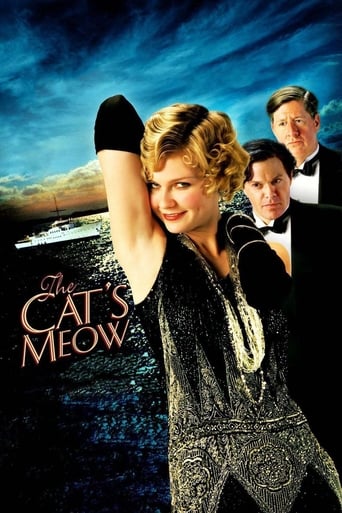
Semi-true story of the Hollywood murder that occurred at a star-studded gathering aboard William Randolph Hearst's yacht in 1924.
A biopic, looking at one of the major leaders of the assassination of Czar Alexander II.
It is 1940. The first transport of prisoners arrives at the newly created concentration camp Auschwitz. One of them is Tadeusz “Teddy” Pietrzykowski, pre-war boxing champion of Warsaw. The camp officers force him to fight in the ring for his and other prisoners’ lives. However, his every win strengthens the hope that Nazis are not invincible. Auschwitz officers notice the growing resistance. The confrontation with the authorities of the camp becomes inevitable.
In 1914, with Italy on the cusp of joining World War I, a group of foreign artists establishes a commune on the rural island of Capri, catching the attention of young Lucia, a local illiterate shepherdess who soon falls under their spell.
Inspired by true events from the 1970s, the story revolves around a young detective who becomes the head of a police unit focused on catching a rampant serial killer of women, nicknamed 'The Silesian Vampire'.
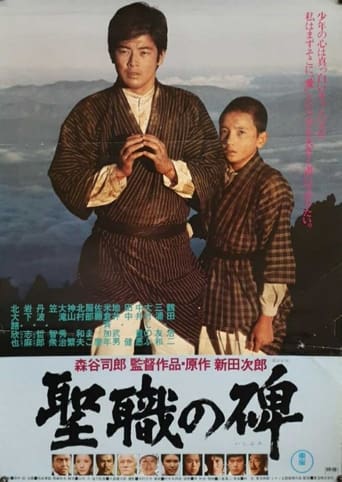
A rural high school takes part in a mountain-climbing exercise and are caught in a sudden typhoon.
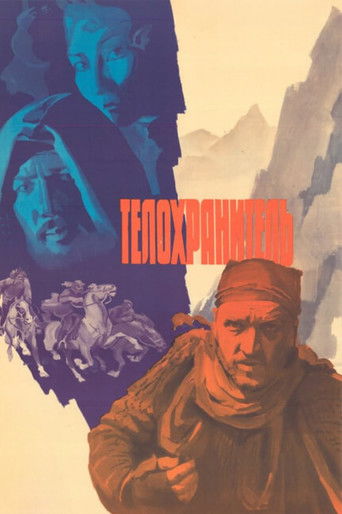
The setting is Central Asia during the Russian civil war. In the post-revolutionary twenties, when the power in European Russia was (officially) "fully in the hands of the workers and peasants", but the fight against the Basmachi rebels was in full swing. When a Red Army detachment captures Sultan Mazar, the brains behind the Bazmachi contingent, a decision is made to escort urgently the prisoner to the Bukhara province. The difficult mission is entrusted to a grizzled mountain trapper and conscientious revolutionary called Mirzo. His expertise is essential to traverse the precarious paths and steep mountain ridges along the way, impossible terrain for the inexperienced. A group consisting of Mirzo, his brother Kova, the Sultan, his daughter Zaranghis and slave Saifulla set off on this journey. They are forced to fight on the mountain ridges as well as negotiate the natural dangers and harsh elements.
Sold into prostitution by her "uncle", a young girl is so innocent and naive that she doesn't know what she has to do.
The movie has reveal the last days of the famous and popular Russian poet - Alexander Pushkin. After the poet faced scandalous rumors that his wife Natalya Pushkina had embarked a love affair, Pushkin then challenged her brother in law to a duel!
Ludwig Guttmann, a renowned German neurosurgeon who fled Nazi Germany in the early days of WWII, takes a position at Stoke Mandeville Hospital in Buckinghamshire, England in 1944 and begins to transform the lives of his patients, paralyzed soldiers that have been written-off and who are facing death from neglect. A breakthrough comes when Dr. Guttmann introduces sport into their rehabilitation, a breakthrough that leads to the founding of the Paralympic Games.
Former P.O.W. Jack Calgrove moves Heaven and Earth to be reunited with his children following the Civil War. After returning home, Jack discovers that his wife has tragically died and his children, presumed to be orphans, are heading deep into the West on a train crossing enemy lines, with the intent of being placed into new homes. Calgrove and another soldier team up with a troop of Native American sharpshooters and a freed slave as they try to stop the train.
In 1887, at a time when duels are in vogue in Paris, Clément Lacaze and Marie-Rose Astié meet. He's a charismatic master of arms; she's a feminist, far ahead of her time. Clément gets caught in a spiral of violence and decides to initiate Marie-Rose in the art of dueling. The two must work together to save face. How far will they go to defend their honor?
Hsi Shih: The Beauty of Beauties was one of the most ambitious films made in the Taiwan film industry in the 1960s. After leaving The Shaw Brothers studio in Hong Kong and moving to Taiwan, filmmaker Li Han-hsiang mounted this historical epic. Told through the story of Xishi (Hsi Shih), one of the 'Four Great Beauties' of Chinese history, the film portrays the war between two Chinese Kingdoms during the Warring States Period (475-221 B.C). After the kingdom of Yue is defeated by the kingdom of Wu, King Goujian of Yue takes pains to prepare for his revenge and rebuild his country. Knowing that King Fucha of Wu is lewd and lustful, he offers Xisi to the court of Wu to serve as Fucha’s concubine, with Fucha unaware that she is also a spy. She uses her charm to draw Fucha away from his office and governance, while King Goujian rallies his forces together to attempt to reclaim his lands.
Sicilian bandit Salvatore Giuliano's bullet-riddled corpse is found facedown in a courtyard in Castelvetrano, a handgun and rifle by his side. Local and international press descend upon the scene, hoping to crack open the true story behind the death of this young man, who, at the age of twenty-seven, had already become Italy’s most wanted criminal and celebrated hero.
In 1456, French King Charles VII recalls the story of how he met the 17-year-old peasant girl Joan of Arc, entrusted her with the command of the French Army, and ultimately burned her at the stake as a heretic.
Activate your FREE Account!
You must create an account to continue watching