The military history of animals is surprising and little-known. Starting from a strange London memorial dedicated to war animals, the evocative power of animation and the testimonies of those who are passionate about this long history, this documentary sets out to meet these anonymous heroes.
Two rebels battle an evil king in a fantasy medieval Turkish kingdom. Identifying tattoos, galley slavery, stoning, beheadings, sword fights abound. A disneyesque fantasy history yarn, except for the rather extreme violence.
WARRIOR EMPIRE: THE MUGHALS is a sweeping, in-depth portrait of India's most colorful, violent, and majestic era. From 1526 to 1858, this dynasty of nomadic warriors indulged their appetite for territorial expansion, spreading their rule throughout the Indian subcontinent. Though they conquered their kingdom with crushing brutality, the Mughals were also brilliant technological innovators and masters of art and architecture. This program offers lush, detailed images of Mughal accomplishments such as the glorious Taj Mahal, palaces, forts, water systems, elaborate gardens, and richly crafted artwork. Step-by-step scientific recreations of advanced Mughal metallurgy and weaponry show the meticulous production of chain mail armor for a battalion of elephants, lethally flexible composite bows, rocketry, and swordsmith techniques passed down through the generations, and still alive today.
The 22-year-old young man promises to be a great poet, but he also has a warm heart. He spends his summer time at a friend's mansion. The beautiful Maryla appears there. Young Adam's heart beats harder and harder, but his closest friend Thomas Zan is there, who also looks at Maryla. There is a confrontation between the two men, from which Adam emerges victorious. Tomasz leaves, leaving the field to his friend to find his life, happiness in Maryla....
In the early 1970s, Lakhdar, an Algerian peasant, is forced to leave his desert land and his family for France, but immigration weighs on him and he dreams of returning. This day arrives, he walks in Paris, events decide otherwise.
The early years of the great missionary Hudson Taylor are portrayed in this drama. The movie details his work in China and the trails he endured. Hudson Taylor is an inpiration to all as a man of true faith in the living God.
It was 1969 and America was embarking on the biggest adventure known to man - a voyage to the moon. Daniel too was pursuing the unknown; leaving the path of isolation he had traveled for so many years to embrace the love of another. The only question was would he be able maintain that road to glory or would he veer off course never to be seen again...
Gabriel de la Concepcion Valdes (Plácido) is accused of leading a conspiracy against the Spanish colonial government. Preoccupied by the development of Afro-Hispanic artist and craftsmen of the mid 19th century, Plácido was executed after living a short and controversial life.
During the Nuremberg Trials, the victors of the Second World War judge those responsible for the Third Reich.
After marrying a rich heiress, a young man from humble origins is dedicated to looking for coal in the surroundings of Gijón.
27 Olympic and Paralympic champions, aged 20 to 100, share their stories in this Mickaël Gamrasni documentary narrated by actress Marion Cotillard. As heirs to previous generations, they trace the incredible genealogy of French Olympism. The documentary revisits over a century of French participation in the Olympics, from their inception in 1896 to the recent feats that have elevated France to the summit. It’s a human adventure, brimming with memories, acts of bravery, and epic emotions: the collective narrative of France winning.
While enjoying his relationship with Cleopatra, Antony neglects his Roman responsibilities, angering Octavian Caesar. Cleopatra rejoices when Antony's wife dies, but Antony's desire for political advancement leads him to marry Caesar's sister. The fragile peace that emerges is short-lived, as Antony returns to Egypt, leading to full-scale war.
Isaac Julien's visionary film Lessons of the Hour explores the incomparable achievements of Frederick Douglass, America’s foremost abolitionist figure. After escaping slavery in Maryland, Douglass gained prominence on the abolitionist circuit as an extraordinary orator, becoming the most photographed American of the 19th century. Julien’s project is informed by some of Douglass’s most important speeches, such as Lessons of the Hour, What to the Slave Is the 4th of July?, and Lecture on Pictures, the latter being a text that connects picture-making and photography to his vision of how technology influences human relations. Julien's work gives expression to the zeitgeist of Douglass’s era, his legacy, and the ways in which his story may be viewed through a contemporary lens. The presentation also includes photographs and tintypes produced in conjunction with the film.
During WW2, in a Nazi-occupied country, a local partisan blows-up a German military train, prompting the Germans to take civilian hostages to be shot if the culprit doesn't surrender before a deadline.
Heist: Who Stole the American Dream? reveals how American corporations orchestrated the dismantling of middle-class prosperity through rampant deregulation, the outsourcing of jobs, and tax policies favoring businesses and the wealthy. The collapse of the U.S. economy is the result of conscious choices made over thirty five years by a small group: leaders of corporations and their elected allies, and the biggest lobbying interest in Washington, the U.S. Chamber of Commerce. To these individuals, the collapse is not a catastrophe, but rather the planned outcome of their long, patient work. For the rest of the country, it is merely the biggest heist in American history.
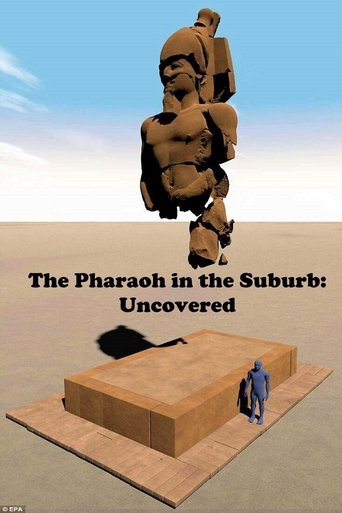
A chance find in a suburb of Cairo has shed new light on an all but forgotten Pharaoh, Psamtik I. Discovered in 2017, an eight-tonne fragment of a statue has led experts to believe that he was, in fact, one of Egypt’s greatest leaders, as this documentary reveals
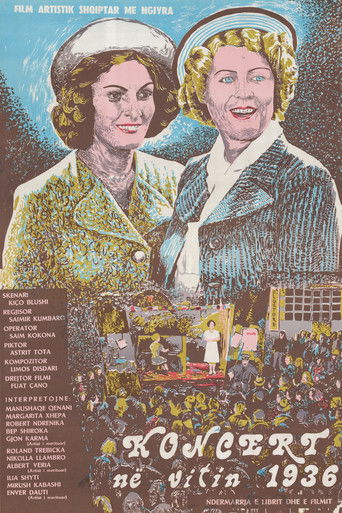
In 1936, two female artists (a singer and a pianist) visit the city of Lushnja, which was very conservative.
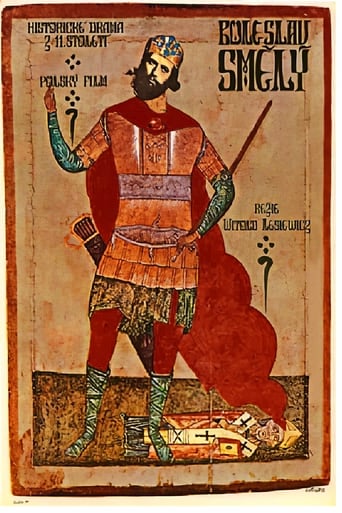
Portrays the power struggle between the king of Poland, Bolesław the Bold, and the Bishop of Kraków, Stanisław Szczepanowski.
Activate your FREE Account!
You must create an account to continue watching