Set in rural Ostrobothnia in 1859, Tuomas Kantola, a farmer, is the only peasant in the village who does not sell his land to Lohikoski's boss Adler, and even starts to annoy him by building a dam to defy the project to drain Lohikoski's lands. During the summer, Harri , a student, and Kantola's daughter Annika fall in love, which is not accepted by either of their fathers or Annika's ex-fiancé Tuomas.
It seems that Canada don't want to hear about their heroes of the two World Wars, especially in Quebec. In English, La Guerre oubliée means The Forgotten War. Here, we talk about the 1914-18 big thing. This documentary doesn't use old footage, but actors to show us some parts of that war in Quebec. Joe Bocan sings some songs of that period and makes the narrations. There's also some rare veterans of the war who talk.
Was the legendary playwright William Shakespeare really the author of his acclaimed plays? Or was he just a straw man working for a secret society? Norwegian organist and researcher Petter Amundsen claims to have a solid theory on the subject. Shakespearean scholar Robert Crumpton decides to travel to Norway to meet him.
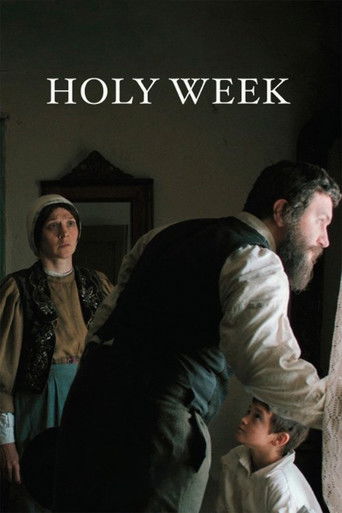
The Holy Week, around 1900, somewhere in Romania. The tense relationship between the Jewish innkeeper Leiba and Gheorghe, his Christian employee, reaches the point where the innkeeper decides to expel the latter. Revengeful, Gheorghe promises Leiba that he will return on Easter Night to “settle” his accounts. This threat comes as a last straw against Leiba’s attempts to cohabit with his hostile, anti-Semitic environment. From then on, Leiba will struggle distinguishing between the real danger and the one fabricated by his anxieties, engaging onto a path of transformation leading to extreme consequences.
The movie Okht al-Reza (Reza's sister) narrates the journey of the Lady of Dignity, Hazrat Masoumeh PBUH from Madinah to Qom. While portraying the events of the Prophet's path, her time, Ma'mun's conspiracies and efforts for her martyrdom, the work tries to express a mystical narrative of the character of Hazrat Masoumeh. It deals with the story of this journey, and includes passages about the political and social atmosphere of the time, where the general atmosphere of the storytelling is somewhat close to the documentary.
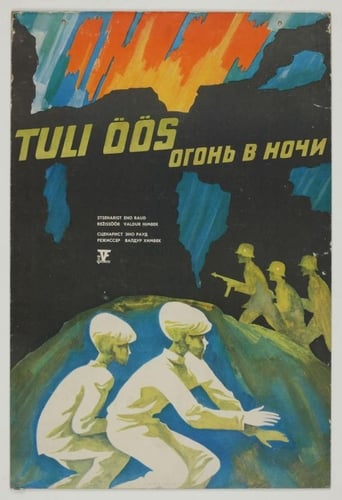
Ülo and Olev think the German occupation is humiliating and the soldiers are arrogant. But even among Estonians there are people who cannot be trusted - this can have fatal consequences. Witty schoolboys find out that Mr Velirand, who has moved in the apartment that once belonged to their teacher, is a henchman of Fascists. The boys make up their minds to give people warning about the provocator, even if the rebellion is risky and their opponent superior, as it had been in the St George's Night Uprising in 1343.
Spring 1941. A group of soldiers under the command of Lieutenant Alexis Komninou, protects the border at Fort Rupel and prepares to accept the German attack. The officer together with the soldier Kosmas Georgiou undertake a spying mission of the German forces in Bulgaria.
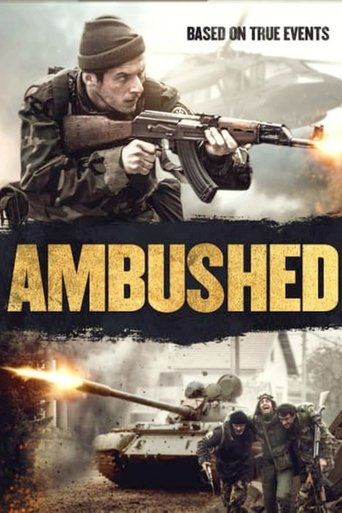
In the autumn of 1991, a small group of Croatian soldiers go on patrol in an improvised armored vehicle. Soon after that they would get ambushed and their vehicle would get destroyed, in that situation they were forced to hide in a nearby house. Whilst stationed in that house they would get attacked by rebel Serbs, Serbian Special Forces and the JNA (Yugoslav People's Army, also reffered to as Yugoslavian National Army). Their resistance to the attackers would last 24 hours whilst their fellow combatants would attempt to try and get them out of there. The movie and story is based on true events which happened during the Croatian War of Independence.
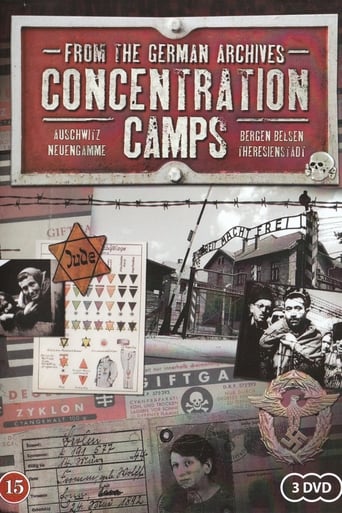
This chilling, vitally important documentary was produced to mark the 40th anniversary of the liberation of Auschwitz Concentration Camp. The film contains unedited, previously unavailable film footage of Auschwitz shot by the Soviet military forces between January 27 and February 28, 1945 and includes an interview with Alexander Voronsov, the cameraman who shot the footage. The horrifying images include: survivors; camp visit by Soviet investigation commission; criminal experiments; forced laborers; evacuation of ill and weak prisoners with the aid of Russian and Polish volunteers; aerial photos of the IG Farben Works in Monowitz; and pictures of local people cleaning up the camp under Soviet supervision. - Written by National Center for Jewish Film
In 1973, after Pinochet's coup, Chile was one of the most dangerous places in the world. The only apparently safe place was the embassies. The film is based on real accounts by João Carlos Bona Garcia who spent 42 days inside the Embassy in these conditions “of not knowing if he would be alive the next day” and survived.
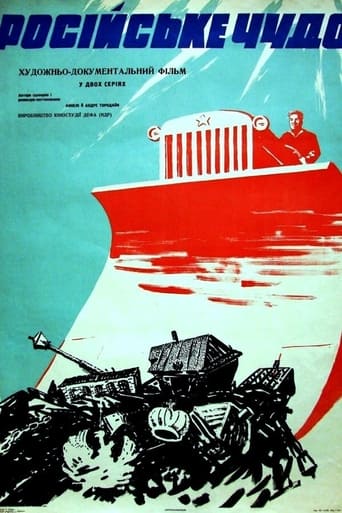
A two-part East German documentary tracing Russia’s transformation from the Tsarist Empire to the Soviet Union, from the 1917 October Revolution to the achievements of the space program. Directed by Andrew Thorndike and Annelie Thorndike, the film assembles extensive archival footage to chart political upheaval, ideological consolidation, and technological ambition in twentieth-century Russia. Produced by DEFA and first broadcast on East German television in 1963.
A young officer recently arrived from Buenos Aires takes charge of a military base on the edge of the desert.
"A Park Grows in Brooklyn" is a three-minute historical and educational film produced for the Brooklyn Bridge Park Coalition (now the Brooklyn Bridge Park Conservancy), sponsor of the "Movies with a View" Summer Film Series taking place annually on what is presently known as the Empire Fulton Ferry Lawn. Crafted during the Spring/Summer of 2000, the film includes historical images and artistic renderings of the Twin Towers along the Manhattan skyline, just one year prior to September 11, 2001. Today, One World Trade Center and the Brooklyn Bridge Park live and grow.
Once praised as "Yotsuya Masamune," the renowned swordsmith Kiyomaro was living in seclusion in the mountains with his apprentice Onimaro. However, Kiyomaro, who had begun to suffer from trembling hands due to alcohol and could no longer forge satisfactory swords, one day confided in Onimaro. Thirteen years ago, Kiyomaro had a secret relationship with a girl who served in the Ōoku (the shogun's harem), but after she caught the shogun’s attention, she took her own life. Her father, the leader of the Iga undercover agents (Isao Natsuyagi), blamed Kiyomaro for her death and sent assassins after him, forcing Kiyomaro to flee. Along the way, regretting that he had made many cheap swords just to earn some travel money, he asked Onimaro to find and discard these worthless blades. When an assassin suddenly appeared, Kiyomaro stopped Onimaro from pursuing him, but that night, Kiyomaro committed suicide.
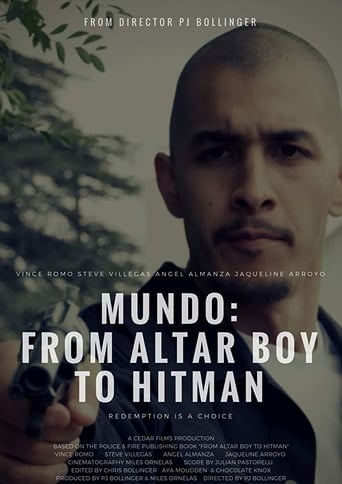
Based on the true story of ex-Mexican Mafia member Ramon "Machine Gun Mundo" Mendoza.
Filmed in IMAX, a young girl questions her grandfather about the alleged curse of King Tutankhamen. His response takes us up to the source of the nourishing river Nile, to the Great Pyramids of Giza, to the Valley of the Kings.
A printmaker, who was killed in the 228 Incident, falls into an unknown square space, in which he imagines the life he should have had…
Activate your FREE Account!
You must create an account to continue watching