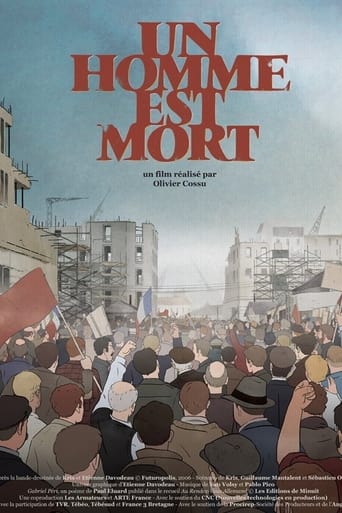
Brest, 1950. The war ended five years ago and nothing remains of the city. Massive bombings and intense fighting lasting more than a month turned the city, its docks, its arsenal, into ashes. Thousands of workers will build it up again, brick by brick. But with awful work conditions protests quickly arise and a strike begins. Violent confrontations happen during manifestations. Until one man falls. The next day René Vautier lands at Brest clandestinely to make a movie about the movement.
Recording of the play 1789, a collective creation by Théâtre du Soleil at La Cartoucherie de Vincennes in 1970, edited from several shows.
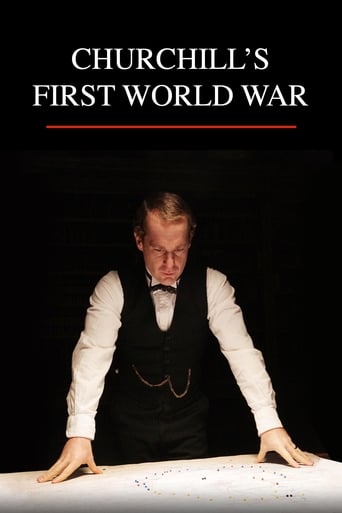
Drama-documentary about Winston Churchill's extraordinary experiences during the Great War, with intimate letters to his wife Clementine allowing the story to be told largely in his own words. Just 39 and at the peak of his powers running the Royal Navy, Churchill in 1914 dreamt of Napoleonic glory, but suffered a catastrophic fall into disgrace and humiliation over the Dardanelles disaster. The film follows his road to redemption, beginning in the trenches of Flanders in 1916, revealing how he became the 'godfather' of the tank and his forgotten contribution to final victory in 1918 as Minister of Munitions. Dark political intrigue, a passionate love story and remarkable military adventures on land, sea and air combine to show how the Churchill of 1940 was shaped and forged by his experience of the First World War.
Living in Pasteur's private life during his first human experiment with the rabies vaccine, the hidden side of the scientist emerges: a rough yet tender man, a warrior overwhelmed by doubt, a revolutionary willing to do anything to impose on his detractors the incredible discovery that will pave the way for modern medicine.
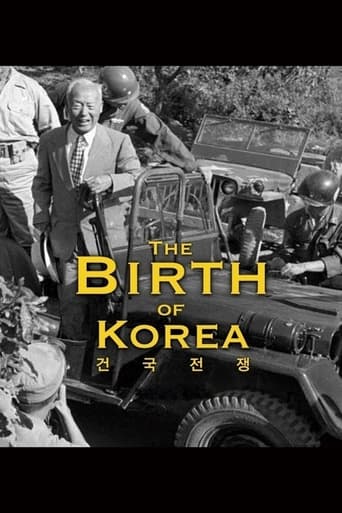
Since South and North Korea's liberation in 1945, North Korea, a communist dictatorship that suppresses freedom and oppresses human rights, and South Korea, which has entered the path of economic prosperity and advanced countries based on freedom and democracy, have taken different paths. How did the two countries with the same language, history, and race, become divided into two extreme countries? A work that highlights the sacrifices and struggles of President Syngman Rhee and the first generation of founding members who worked to create and protect today's Republic of Korea over the past 70 years of history.
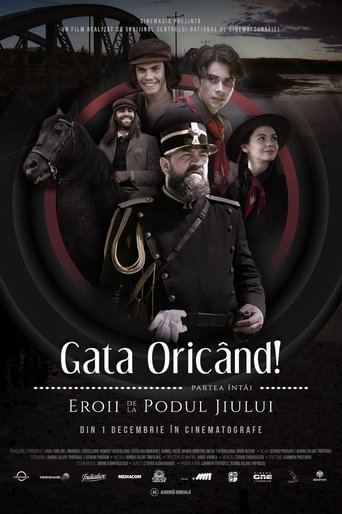
On the morning of October 14, 1916, when a young scout discovers that the dreaded German army has arrived unhindered near Târgu-Jiu, he hurriedly informs the city commissioner Ioan Popilian and, together with some policemen and scouts, helped by some civilians remaining in the already evacuated city, fights at the Jiului Bridge to stop the enemy from occupying the city until the arrival of the Romanian army. The occupation of the bridge would have led to the occupation of the railway station, which would have allowed the German army to stop the retreating Romanian army. A movie based on a true story.
Grodno, the eastern border of pre-war Poland. On September 1, 1939, German planes bomb the city. One of the bombs hits the school of Leoś, Ewelina and Tadek. Literally and symbolically, the world of a carefree childhood, fun and first crushes ends.
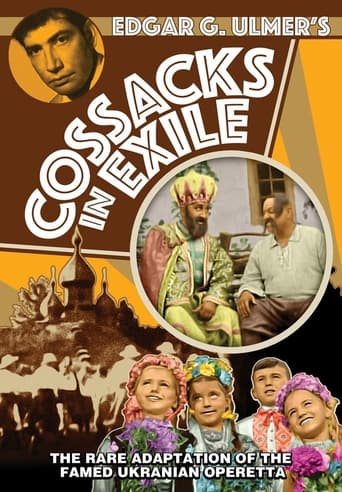
In Ukraine, in 1775, the Zaporogian Cossacks learn that Moscow is sending soldiers to destroy their fort. The Ukrainian villagers appeal to Czarina Catherine, but she insists that they join the Russian army or risk annihilation. Instead, the Cossacks burn their fort and flee on the Danube River to Turkey, where they live in peace, but still yearn for their homeland.
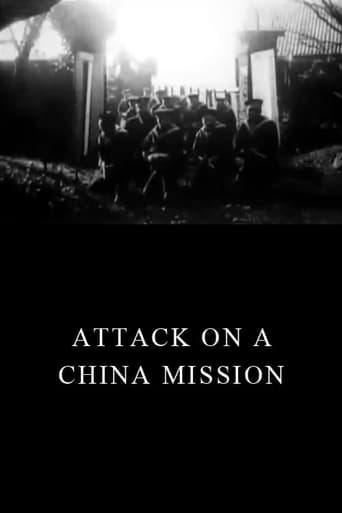
The titles tell us this film is based on an incident in the Boxer Rebellion. A man tries to defend a woman and a large house against Chinese attackers. They attack with swords, guns, and paddles. He's over-matched. What will become of the mission, its defenders, and its occupants?
Józef Piłsudski died on May 12, 1935. Many Poles were deeply affected by his passing. The Marshal's funeral was a grand patriotic ceremony that lasted several days and attracted hundreds of thousands of people.
Young Richard of Gloucester uses the chaos of the Wars of the Roses to begin his unscrupulous climb to power in this classic Shakespearean history of a king in the throes of jealousy and murder. Despite being manifestly unfit to govern, he overcomes each obstacle in his way to seize the crown, as King Richard III. But as those around him turn against him, and as his plans begin to unravel, where else can he turn as the Lancastrian opposition returns to drag the country into battle once more and put an end to Richard’s tyrannical rule. Richard III is a savagely comic analysis of the exercise of power, reminding us of the dangers of tyranny and our duty not to let it go unchecked.
The intricate history of UFA, a film production company founded in 1917 that has survived the Weimar Republic, the Nazi regime, the Adenauer era and the many and tumultuous events of contemporary Germany, and has always been the epicenter of the German film industry.
In the Bible, God destroys the sinful cities of Sodom and Gomorrah and sides with Joshua to conquer another misbehaving city: Jericho. Are these stories true or simply moral fables? Archaeological and geological evidence holds the answer.
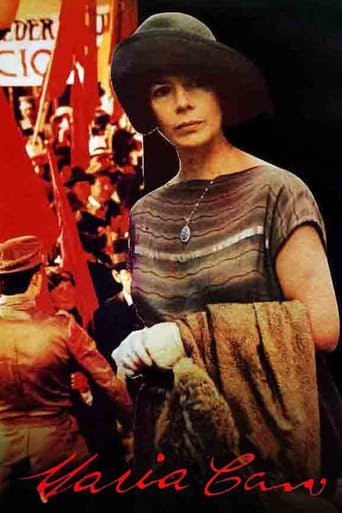
Colombia receives the indemnity for Panama and accepts foreign credit to undertake development works, which increases the number of workers, although with poor wages and terrible working conditions. María Cano, a political activist, began her fight for the conditions of salaried workers and for the fundamental rights of the population.
Massimo returns to Venice after years of fighting against the Turks. He finds his beloved Elena, who in the meantime has married the doge who is tyrannizing the city.
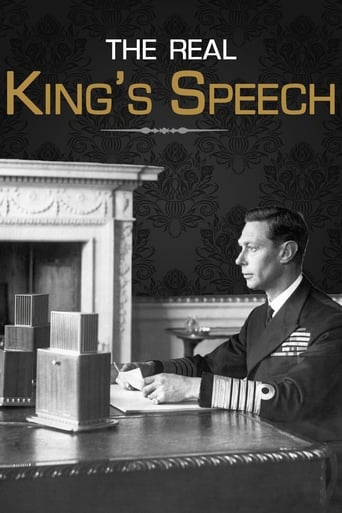
The true story of King George VI's struggle to overcome his stammer, and the parts played in his battle with his disability by his speech therapist, brother, father and wife.
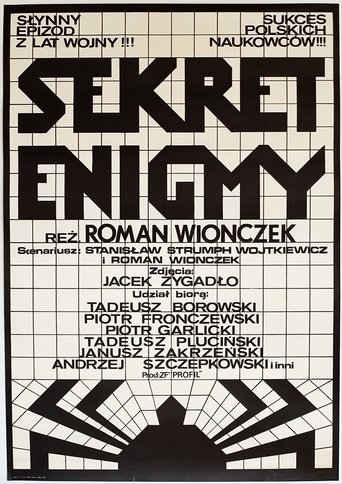
Three Polish mathematicians are the first to crack the sophisticated Enigma code used by the Germans just before the Second World War. They build replicas of the Enigma machines and manage to get two of the machines to the British and French code-breakers before the German invasion of Poland in 1939; they ask that recognition be given to their work at the end of the war. After the invasion, the Polish cipher bureau escapes and continues their decoding in Algeria and unoccupied France.
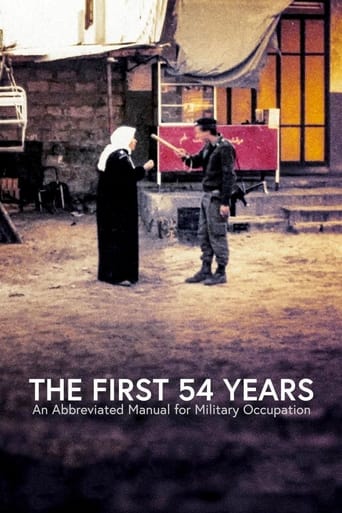
An exhaustive explanation of how the military occupation of an invaded territory occurs and its consequences, using as a paradigmatic example the recent history of Israel and the Palestinian territories, the West Bank and the Gaza Strip, from 1967, when the Six-Day War took place, to the present day; an account by filmmaker Avi Mograbi enriched by the testimonies of Israeli army veterans.
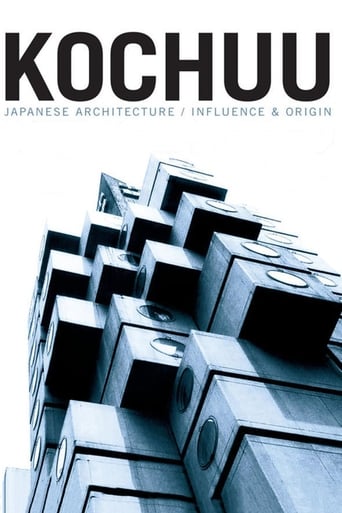
A film about modern Japanese architecture, its roots in the Japanese tradition and its impact on the Nordic building-tradition. Winding its way through visions of the future, traditions, nature, concrete, gardens and high-tech, KOCHUU tells us how contemporary Japanese architects strive to unite the ways of modern man with the old philosophies in astounding constructions. Interviews with, and works by, Japanese architects Tadad Ando, Kisho Kurokawa, Toyo Ito and Kazuo Shinohara and Scandinavian architects Sverre Fehn, Kristian Gullichsen and Juhani Pallasmaa.
Activate your FREE Account!
You must create an account to continue watching