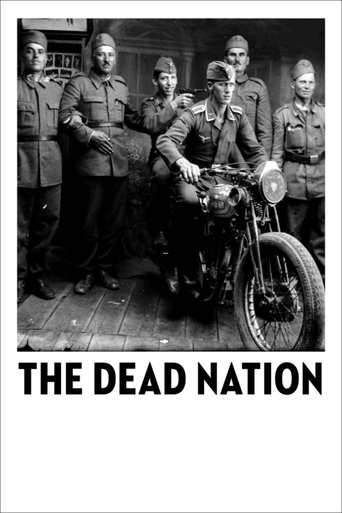
A documentary-essay which shows Costică Axinte's stunning collection of pictures depicting a Romanian small town in the thirties and forties. The narration, composed mostly from excerpts taken from the diary of a Jewish doctor from the same era, tells the rising of the antisemitism and eventually a harrowing depiction of the Romanian Holocaust.
This two-part, three-hour biography, offers an incisive portrait of Henry Kissinger, the enigmatic powerbroker who served in the topmost echelons of American diplomacy. Whether celebrated or reviled, Kissinger’s contradictions reflect those at the heart of America’s foreign policy during the second half of the 20th century, a period in which America became the unchallenged superpower in the world yet often pursued policy at odds with its own highest ideals.By examining his life up to and throughout his tortured relationship with President Richard Nixon, Kissinger endeavors to understand precisely what drove his relentless drive for power. It is a story of deep contradictions — of Kissinger’s obsession with securing American supremacy, staving off nuclear war, and checking the power of our enemies, even while consorting with dictators and tolerating widespread violation of human rights.
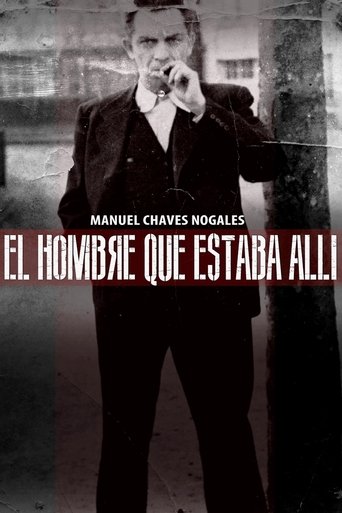
The Spanish journalist Manuel Chaves Nogales (1897-1944) was always there where the news broke out: in the fratricidal Spain of 1936, in Bolshevik Russia, in Fascist Italy, in Nazi Germany, in occupied Paris or in the bombed London of World War II; because his job was to walk, see and tell stories, and thus fight against tyrants, at a time when it was necessary to take sides in order not to be left alone; but he, a man of integrity to the bitter end, never did so.
In 1906, Georges Braque and Pablo Picasso were 24 and 25 years old. The Butte Montmartre is their Parisian sanctuary where artists in need of recognition meet. Braque and Picasso become friends to the point of never leaving each other. For the moment, their paintings do not interest many people; only Apollinaire, then aged 26, and the young gallery owner Daniel-Henry Kahnweiler, 22, saw immense potential in them. And in addition to their passion for painting, these four inseparable boys share the same appetite for modernity. Collages, diversions of materials and geometrization of forms: cubism opened the way to abstraction. A revolution initiated by Picasso and Braque, which profoundly changed the course of the history of modern art.
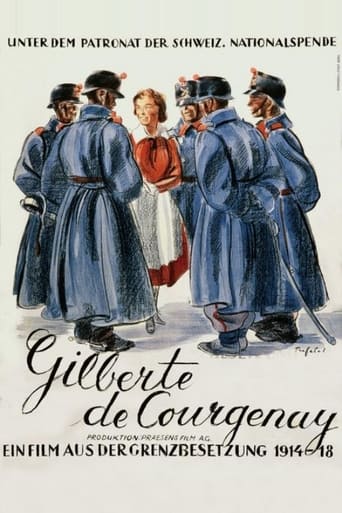
Gilberte Montavon was a legend in her own lifetime. As a young woman, she was confidante to hundreds of thousands of Swiss-German speaking soldiers during the First World War, and remembered most of their names. She was still a teenager when the war began, and was immortalised by a song written during the war years by the Swiss-German bard and lute player, Hans Inn der Gand.
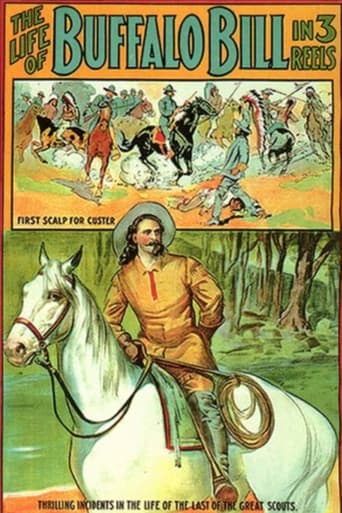
While on a vacation, an elderly Buffalo Bill dreams of his adventures as a young man when he scouted for the cavalry, fought Indians and captured outlaws.
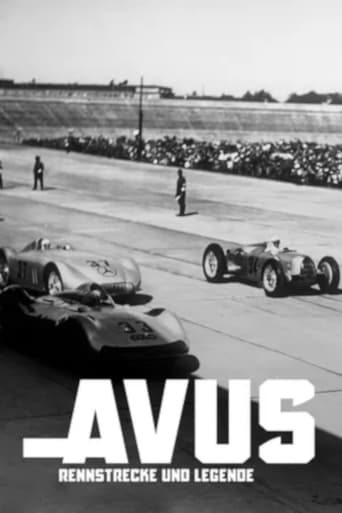
In autumn of 1921, the AVUS, the ‘Automobil-Verkehrs- und Übungsstraße’ (The automobile traffic and training road), was inaugurated in the southwest of Berlin with a car race. The two long straights, each ten kilometres long, were connected by two turns: It was a high-speed track which was meant to expedite the development of the automobile in Germany. The Documentary explores the moving story of the first cars-only road in the world.
Documentary focusing on heavyweight boxing champions from 1882 to 1929.
1830s, Moldavia. The groom Todor fell in love with his master's maid, Yustinia. Having found himself in hard labor, Todor organized an escape and, with a group of like-minded people, took refuge in the codry. So, under the leadership of Ataman Todor Tobultok, the Moldavian rebels, who called themselves haiduks, began to fight against the tyranny of the landowners.
Based on real life events, Summer of '67 brings to life the turbulent times of the sixties and the struggles faced by the men and women impacted by the Vietnam War. Young wife and mother Milly (Rachel Schrey) is forced to live with her mother-in-law while her husband Gerald (Cameron Gilliam) is away on the USS Forrestal. Kate (Bethany Davenport) must choose between Peter (Christopher Dalton) her high school sweetheart and Van (Sam Brooks) her new hippie boyfriend. Ruby Mae (Sharonne Lanier) finally finds true love with Reggie (Jerrold Edwards) only to have him whisked away by the draft. Each woman faces the question of whether or not their man will return, and even if he does, will life as they know it ever be the same?
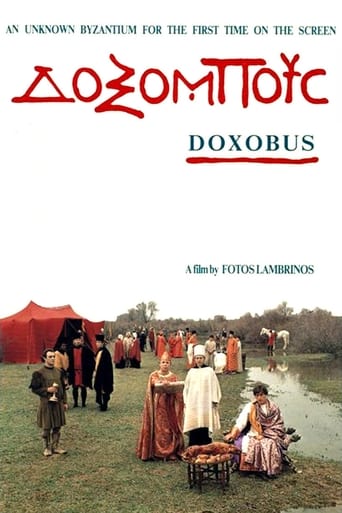
By the 14th century, the Byzantine Empire was, if not on the verge of actual collapse, at least seriously decadent and clearly on its last legs. The hungry wolves of Europe were preparing to dine on its corpse, and as a result the Byzantine army and its allies were constantly engaged in battles and skirmishes. In this story, a widow lives in the 14th-century Byzantine village of Doxobus with her son Xenos. She forms a relationship with a village elder, and when she gives birth to the elder’s son, her son from her previous marriage is sent to live in a monastery.
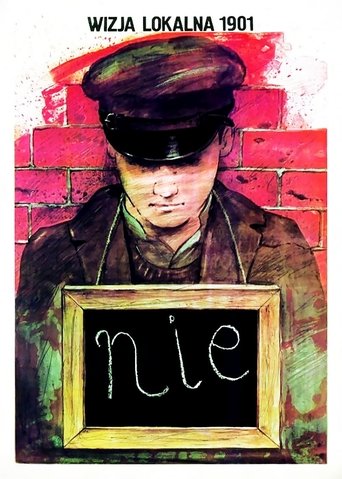
More documentary in its approach than dramatized history, this is a compelling story about a 1901 children's strike in Wrzesnia near the Polish border with Prussia. Poland was partitioned at this time, and a rigidly patriotic Prussian teacher in Wrzesnia follows the dictates of the Germans in parliament and insists that the children be taught their religion classes in German. When the children refuse to take part in the classes, they are supported by the local priest, but that does not save them from being beaten. They are also kept after school and tormented in other ways as well. Newspapers, parents, and the nation as a whole get involved, transforming a simple children's strike into a national incident.
Jeremy Clarkson tells the dramatic story of the Arctic convoys of the Second World War, from Russia to the freezing Arctic Ocean.
Showtime's "In the 20th Century" is a millennium-related strand of feature-length documentaries in which famous directors take on major subjects of their choosing. In the first of the six films, "In Search of the Happy Ending," filmmaker Garry Marshall delves into the institution of marriage as it has evolved in America throughout the past 100 years.
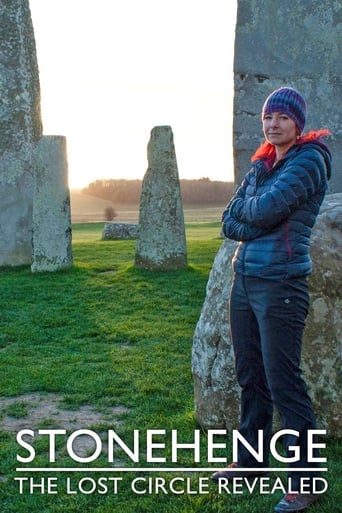
Professor Alice Roberts follows a decade-long historical quest to reveal a hidden secret of the famous bluestones of Stonehenge. Using cutting-edge research, a dedicated team of archaeologists led by Professor Mike Parker Pearson have painstakingly compiled evidence to fill in a 400-year gap in our knowledge of the bluestones, and to show that the original stones of Britain’s most iconic monument had a previous life. Alice joins Mike as they put together the final pieces of the puzzle, not just revealing where the stones came from, how they were moved from Wales to England or even who dragged them all the way, but also solving one of the toughest challenges that archaeologists face.
This investigative documentary follows a team of archaeologists searching for the hard evidence behind chilling vampire myths, from the discovery of bodies staked into their coffins on the island of Lesbos to the New England vampires who died from tuberculosis.
A documentary-fiction that reconstructs the complex procedural path followed by the 1969 massacre through the point of view of Francesca Dendena, daughter of one of the victims and President of the Family Association of the victims of the Piazza Fontana massacre.
Italian maestro Ermanno Olmi tells the tale of the journey of the Magi in this lyrical odyssey. The film focuses on a wise man who interprets his sighting of a comet streaking through the sky as a spiritual message. Joined by two associates, soldiers, villagers and others, the Magi sets out on a journey that tests his beliefs and strength.
A film about short-lived Slovenian war of independence.
Activate your FREE Account!
You must create an account to continue watching