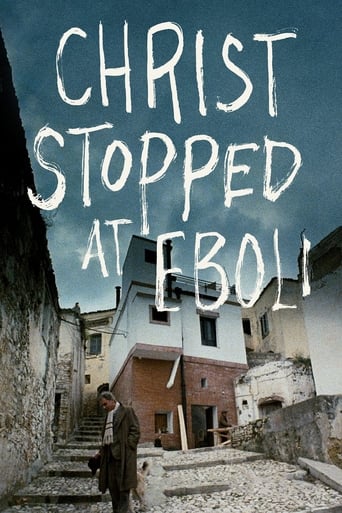
In the fascist Italy of 1935, a painter trained as a doctor is exiled to a remote region near Eboli. Over time, he learns to appreciate the beauty and wisdom of the peasants, and to overcome his isolation.
At the end of the 1950s in Africo, a small village in the southern valley of Aspromonte, a woman dies in childbirth because a doctor fails to arrive on time. No road connects Africo with the other villages. In the wake of this tragedy, all of Africo’s citizens -including children - abandon their usual occupations and unite to build their own road. Giulia, the new schoolteacher, comes from the North with a mission to teach standard Italian to help bring cultural cohesion with Africo and the rest of Italy. But she will have to contend with the local mafioso Don Totó, who is determined to ensure this the town remains cut off, and thus, under his power.
Adriano is a middle-aged man living in a dilapidated villa in Tuscany, when a group of young idealistic students arrives to restore the villa's vineyards.
Matteo is a young successful businessman, audacious, charming and energetic. Ettore instead, is a calm, righteous, second grade teacher always living in the shadows, still in the small town from where both come from. They’re brothers but with two very different personalities. A dramatic event will force them to live together in Rome for a few months, bringing up the opportunity to face their differences with sympathy and tenderness, in a climax of fear and euphoria.
A study of the friendship between a Chinese woman and a fisherman who came to Italy from Yugoslavia many years ago, who live in a small city-island in the Veneto lagoon.
Carlo and Elisa are a successful couple. He’s a university professor and writer facing a creative block; she’s a brilliant, sharp-witted journalist, known for her internationally published editorials. They live in Rome, moving between accomplishments and routine, affection and something that might be fading. In search of new energy, they travel to Morocco with their lifelong friends, Anna and Paolo, and their thirteen-year-old daughter Vittoria—bright, curious, a little eccentric. Tensions soon rise.
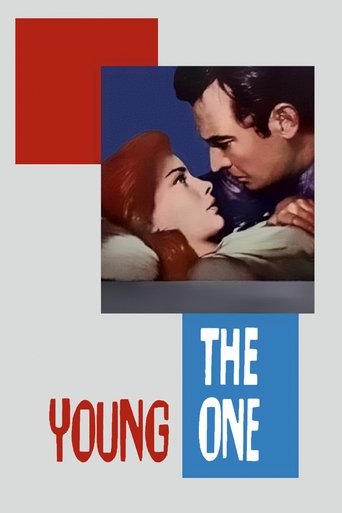
A jazz musician seeks refuge from a lynch mob on a remote island, where he meets a hostile game warden and the young object of his attentions.
In a small suburb on the outskirts of Rome, the cheerful heat of summer camouflages a stifling atmosphere of alienation. From a distance, the families seem normal, but it’s an illusion: in the houses, courtyards and gardens, silence shrouds the subtle sadism of the fathers, the passivity of the mothers and the guilty indifference of adults. But it’s the desperation and repressed rage of the children that will explode and cut through this grotesque façade, with devastating consequences for the entire community.
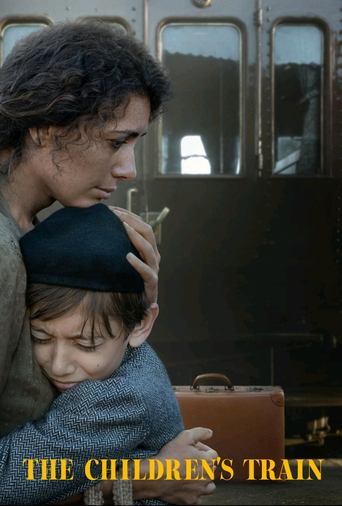
In late 1940s Italy, a mother makes the difficult decision to send her son to the north, where he catches glimpses of a new life away from poverty.
Train operator Andrea Marcocci has to witness the suicide of a desperate man who jumps in front of his train. Under the influence of this shock he starts making mistakes. A check up by a doctor reveals that he's at the brink of becoming an alcoholic. Due to this evaluation he is degraded and must accept a salary cut.
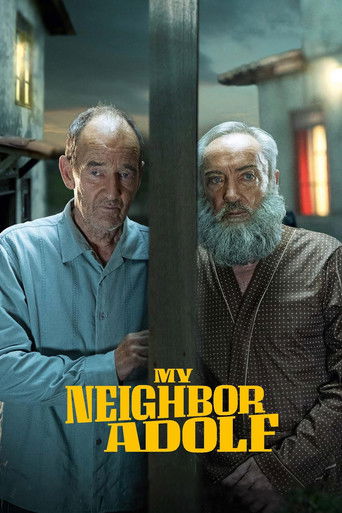
South America, 1960. A lonely and grumpy Holocaust survivor convinces himself that his new neighbor is none other than Adolf Hitler. Not being taken seriously, he starts an independent investigation to prove his claim, but when the evidence still appears to be inconclusive, Polsky is forced to engage in a relationship with the enemy in order to obtain irrefutable proof.
Italy, 1989. After years of hard training, 13-year-old Felice, carrying his father's expectations on his shoulders, finally sets out to compete in the national tennis tournaments. While dreaming of a simple summer vacation, he's instead placed under the wing of ex tennis champion Raul, an unconventional coach hired by his father. Match after match, the two embark on a journey that will lead Felice to discover the taste of freedom, and Raul to glimpse the possibility of a fresh start. As they travel along the Italian coast, an unexpected, deep, and sincere bond between them develops.
At the end of World War II, shallow, self-centered Mara is the prettiest girl in her small Italian village; Bebo is a Communist partisan who is finding it difficult to adjust to the dull banalities of life in peacetime. When Mara’s father, a passionate Communist, declares that his daughter will marry the returning hero, her reactions range from joy to bitter resentment.
Vincent was born near Paris, but has cut off every link with his roots. Maria, fifteen years younger, grew up in Ostia, but no longer sees her family. Together they form a couple that does not seem to need anyone. They lead a secluded life in contemporary Rome, indolent and distracted. Furthermore, Vincent and Maria are good at blending in with their environment. When they return home, they make love with the passion of young lovers in a suburban apartment that she has carefully furnished. Yet, on closer inspection, their everyday life betrays what lies behind their seemingly normal appearance: a project carried out by him with a clear determination and accepted by her only by virtue of unconditional love. A plan to help couples who cannot have children. Maria decides that it is time to create a real family. This choice has an inevitable consequence: the rebellion against Vincent, the man of her life.
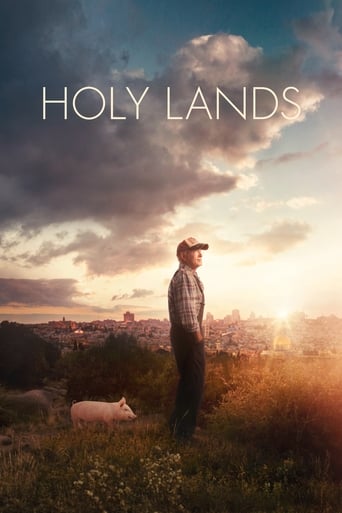
When lapsed Jew and former cardiologist Harry suddenly decides to spend his retirement as a pig farmer in Nazareth, Israel, the move deeply shocks his family and his new neighbours. Back in New York, Harry’s ex-wife Monica is trying to manage the lives of their adult children, Annabelle and David, as well as her own.
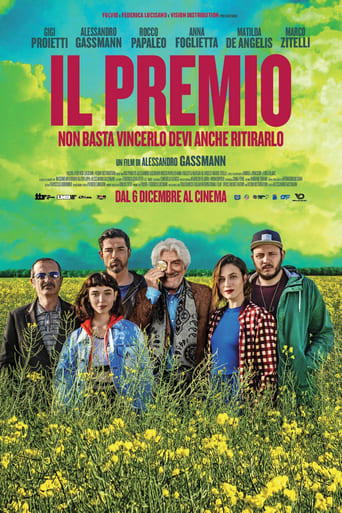
After winning the Nobel Prize, Giovanni Passamonte decides to drive to Stockholm with his sons and assistant rather than fly.
Anna and her son Valerio run away from a husband and a father who has destroyed the love of their family with beatings and anger. They seek refuge in Turin, with Carla, a lifelong friend, an actress and a woman who lives against the grain, who welcomes them, and with the example of her own experience, will show them the way to a just and possible rebirth.
A young woman in early-1900s Italy searches for a mystical sanctuary where her stillborn child can be brought back to life long enough to be baptized.
"Loro", in two parts, is a period movie that chronicles, as a fiction story, events likely happened in Italy (or even made up) between 2006 and 2010. "Loro" wants to suggest in portraits and glimps, through a composite constellation of characters, a moment in history, now definitively ended, which can be described in a very summary picture of the events as amoral, decadent but extraordinarily alive. Additionally, "Loro" wishes to tell the story of some Italians, fresh and ancient people at the same time: souls from a modern imaginary Purgatory who, moved by heterogeneous intents like ambition, admiration, affection, curiosity, personal interests, establish to try and orbit around the walking Paradise that is the man named Silvio Berlusconi.
Activate your FREE Account!
You must create an account to continue watching